|
Central vacuum systems are not only more powerful and convenient than a portable vacuum, they can add value to your home. They also offer other important advantages beyond power and convenience. First, and probably the biggest, is they exhaust to the outside, keeping your home free of re-circulated dust and allergens. Second, is the fact that they will provide the owner with many years of trouble free service.
Knowing how to compare all the different brands and types of central vacuum systems will make buying the right system for your home easier. We hope to assist you in that decision making process by providing you with the following information.
Central vacuums create suction and airflow that move dust and dirt through a series of pipes located within the walls of your home, finally leaving this debris in the dirt receptacle portion of your power unit. What if the suction power decreases? Airflow is the key. When a central vacuum sucks in air, it has to blow it out. Any restriction between the intake and outlet will decrease airflow. Inverted bags, paper bags, foam cartridges, HEPA filters, are restrictions to airflow. No matter how efficient they are, systems with bags as their dirt receptacle will restrict airflow as they fill up with dust and dirt. This in turn will decrease suction. Cyclonic central vacuum systems maintain suction power with limited restrictions to airflow. Cap-Vac recommends cyclonic for its efficiency and power, especially when the Hide-A-Hose system is used.
What matters when you compare brands and types of central vacuum systems? Looking at the numbers and specs can be confusing, frustrating, and time consuming. Let us condense it for you. The three best indicators to get the power and performance you need are: (1) sealed suction, (2) CFM (cubic feet per minute), (3) air watts.
|
1) Sealed suction measures how much vacuum is developed at a perfectly
sealed inlet. At sealed suction there is no airflow. Vacuum and airflow must
be combined to carry dust and dirt through the system. Sealed suction alone
does not indicate cleaning performance. |
|
2) Airflow is the measure of cubic feet of air moved per minute, CFM. Airflow
is rated by the vacuum motor running with no restrictions, so it is the maximum the motor can achieve. However, with no vacuum or sealed suction, there is no ability to pick up dust and dirt. CFM alone does not indicate cleaning performance. |
|
3) Air watts are the actual value of the output air power of the central vacuum system power unit. CFM and sealed suction combined represent this actual cleaning power. Always keep in mind, the air watts measurement (rating) is made with no restrictions, such as dirty bags or filters, etc.
|
With a properly maintained cyclonic system you will always have sustained cleaning power.
We hope this information has provided you with what you need to make a decision on the right central vacuum system. If you should have further questions please feel free to email us here!
How Does a Central Vacuum
System Work?
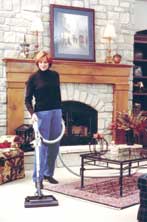 Cleaning the house may not be your idea of a fun activity. But while vacuuming may never be fun, there is a way to make the job a little easier. With Vacu-Maid, Disan, and Vacu-Flo you receive only the highest quality central vacuum system. The power units feature long life motors, superior filtration, and durable construction. The cyclonic systems have, by far, the most sustainable cleaning power in the industry allowing virtually 100% cleaning power at all times. The cyclonic action separates the fine particles, venting them outside. The power unit canister is constructed from corrosion-resistant powder coated galvannealed steel providing you with a system that lasts as long as you own your home. Cleaning the house may not be your idea of a fun activity. But while vacuuming may never be fun, there is a way to make the job a little easier. With Vacu-Maid, Disan, and Vacu-Flo you receive only the highest quality central vacuum system. The power units feature long life motors, superior filtration, and durable construction. The cyclonic systems have, by far, the most sustainable cleaning power in the industry allowing virtually 100% cleaning power at all times. The cyclonic action separates the fine particles, venting them outside. The power unit canister is constructed from corrosion-resistant powder coated galvannealed steel providing you with a system that lasts as long as you own your home.
With a central vacuum system, you place inlets around your home at convenient locations. Instead of plugging a portable vacuum into pre-determined electrical outlets and hoping the cord reaches around your home, you can move the central vacuum hose from inlet to inlet. Where you put the inlets is up to you. You can even install an automatic dustpan that lets you quickly sweep debris into a wall vent using a regular broom.
If you decide to have a central vacuum system installed in your house, there are several things that will happen.
First, you situate a central power unit in an out-of-the-way area such as the garage or utility room. Then, you install wall inlet valves in various locations throughout the house. The valves are connected to the power unit through tubing. The tubing can be run through the attic or cold air returns in the house.
Once you have chosen the location for the power unit/receptacle, you need to decide where you want your wall inlets. These inlets are where you will plug in the "power brush" or unit that you will be using to clean your home. How many inlets you want in your home is based on your own needs. For example, inlets can be based on the number of square feet. There is usually one inlet for every 600 square feet of a home. If you have more than one story in your home, you will need at least one inlet per story. If you decide on professional installation, the installer can help you determine the best inlet placement.
After installation, the system is used by plugging the lightweight hose and power brush unit into a wall inlet. The power button is located on the handle on most systems, so it is totally controlled by you. In other words, you don't have to go to the power unit and turn the system on. You simply put the hose unit in the inlet and begin vacuuming. The system then carries the dirt, dust and debris out of the room, through the in-wall tubing, to the main power unit, where it is deposited in a canister or bag. Central vacuum bags and canisters only need to be emptied an average of once every three months.
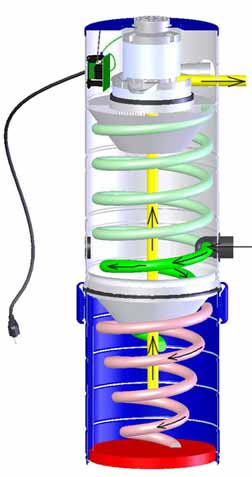
| So How Does Cyclonic Action Work? |
|
Currently Vacuumed Debris
The debris enters the canister where it swirls cyclonically. This allows the debris to fall to the bottom.
Previously Vacuumed Debris
The dirt and debris will continue to swirl around while the system is on. The dirt is trapped in this canister until you are ready to empty it.
Cyclonically Filtered Working Air
Once the dirt is deposited into the bottom canister, the cyclonically filtered working air then passes through the motor fans where it is vented to the outside.
|
A central vacuum system can
reduce the amount of allergens in your home by extracting dirt, dust, mold,
pollen, and pet dander out of your carpet and furnishings - and its simple.
The system sends these allergens through the network of hidden tubing in
your walls to the dirt can located in a remote area of your home. By doing
this, the central vacuum system rids your home of these potentially harmful
irritants--unlike most portable vacuum cleaners, which leave much of the
fine dust recirculating in the air.
By having a central vacuum vented
to the outside of your home, it is possible to remove even the smallest of
particles from your living environment. The best thing about central vacuum systems is that they don't require you to carry a heavy unit from room to room or up and down the stairs. Central vacuum systems are designed to remove all the dirt and debris from your house and send it through tubing located in the walls to a receptacle in an out-of-the-way location like a garage or basement. With central vacuums, you only carry a lightweight hose and power brush unit around the house. The power unit is permanent and out of the way.
Improved Air Quality
 With a central vacuum system, you have the power and versatility to make your home healthy for you and your family. According to the Environmental Protection Agency, the air inside your home can be even more polluted than the outside air of most industrialized cities. Since people spend an average of 90% of their time indoors, indoor air quality becomes a large issue, especially if you or anyone in your family suffers from allergies or asthma. One way to combat this problem and attack the harmful allergens and irritants is with a central vacuum system. With a central vacuum system, you have the power and versatility to make your home healthy for you and your family. According to the Environmental Protection Agency, the air inside your home can be even more polluted than the outside air of most industrialized cities. Since people spend an average of 90% of their time indoors, indoor air quality becomes a large issue, especially if you or anyone in your family suffers from allergies or asthma. One way to combat this problem and attack the harmful allergens and irritants is with a central vacuum system.
Reduce Allergy and Asthma Symptoms
With 20% of the population affected by allergies or asthma, it is important that you rid your home of these harmful irritants.1 Dust mites, pet dander, dust, mold, and pollen are the leading cause of indoor allergies. Keeping your carpets dry and cleaning your home with a central vacuum system will help rid you of these allergens.
A study conducted by the University of California-Davis School of Medicine2 states that use of a central vacuum system can greatly reduce allergy and asthma symptoms.
A study conducted by the University of California-Davis School of Medicine2 states that use of a central vacuum system can greatly reduce allergy and asthma symptoms.
Nasal symptoms - 47% improvement
Sleep symptoms - 44% improvement
Eye symptoms - 61% improvement
Protect Investments While Adding Value to Your Home
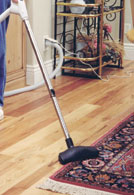 Don't waste time and money on other vacuum cleaners when you can have a central vacuum system easily installed in your new or existing home with no heavy construction or remodeling. Not only does a central vacuum system add value, but it's your first line of defense in protecting your investment in your home's floor covering: rugs, carpet, stone, tile, wood, etc. A central vacuum system is a surprisingly economical investment that adds permanent value to your home. A central vacuum system can cost less than a high-end portable vacuum and can add around $2,000 to your home's resale value. It is made of tough corrosion-resistant galvannealed steel built to last. Don't waste time and money on other vacuum cleaners when you can have a central vacuum system easily installed in your new or existing home with no heavy construction or remodeling. Not only does a central vacuum system add value, but it's your first line of defense in protecting your investment in your home's floor covering: rugs, carpet, stone, tile, wood, etc. A central vacuum system is a surprisingly economical investment that adds permanent value to your home. A central vacuum system can cost less than a high-end portable vacuum and can add around $2,000 to your home's resale value. It is made of tough corrosion-resistant galvannealed steel built to last.
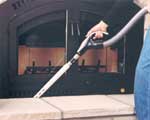
What to Clean:
|
|
|
|
Carpet |
Corners |
Mantles |
Wood |
Drapes |
Crevices |
Behind Appliances |
Tile |
Dry Spills |
Wet Spills |
Mattresses |
Stairs |
Garage |
Computer Keyboard |
Drapes |
Vehicles |
Under Furniture |
Above Furniture |
Delicate Furnishings |
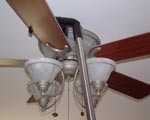
Ceiling Fans |
|
|
|
|
Powerful Vacuum
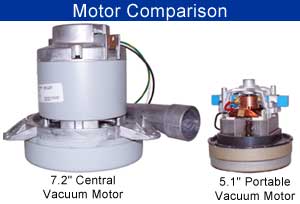
With 3-5 times more cleaning power than most portable vacuum cleaners, you get a superior cleaning in less time. Since the central vacuum power unit is located in a closet or the garage and you aren't having to carry it around while you clean, it can have larger, more powerful motor. The central vacuum allows you to pick up more debris with less hassle than a portable.
Large Dirt Collection
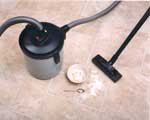
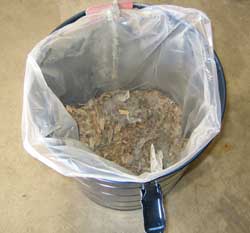 The large dimensions of the dirt canisters allow the vacuum to pick up a lot of debris before it needs emptied. With all of this space for dirt collection it could be months before your dirt canister needs emptying. Depending on how often you clean and how much you sweep up will determine the length of time. The large dimensions of the dirt canisters allow the vacuum to pick up a lot of debris before it needs emptied. With all of this space for dirt collection it could be months before your dirt canister needs emptying. Depending on how often you clean and how much you sweep up will determine the length of time.
This picture was taken six months after being installed in an existing home.
1. American Academy of Allergy, Asthma, and Immunology.
2. University of California-Davis School of Medicine
(in the article
"The Influence of a Central Vacuum System on Quality of Life in Patients with House Dust-Associated Allergic Rhinitis"
and published in the Journal of Investigational Allergology and Clinical Immunology, Vol. 11 (4):290-294).
|